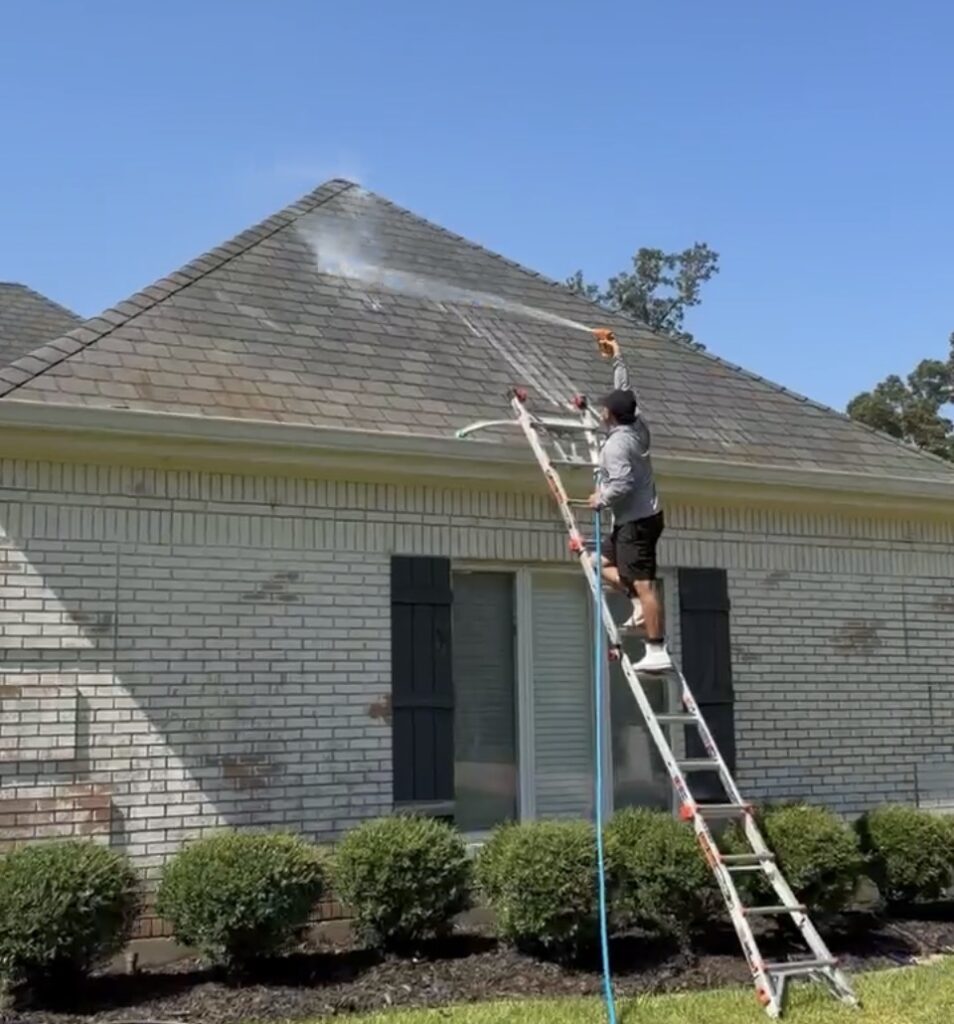
Look up at the roofs in your neighborhood. Many have dark streaks running down from the peak. Most people think it is dirt, mildew or shingle damage. It is none of those. It is a living organism, and it is eating away at your roof.
Here is what causes those black streaks, why soft washing is the safe way to remove them, and how we protect your yard while we work.
What Causes Black Streaks on Your Roof
The streaks come from Gloeocapsa magma, a type of cyanobacteria often called blue-green algae. Spores travel through the air and on wind, birds and squirrels. That is why it spreads from one roof to the next across a neighborhood.
Once it lands, it settles in where moisture stays the longest. North-facing slopes and roofs shaded by trees get hit first. Many asphalt shingles also use crushed limestone as filler, and the algae feeds on it.
As the colony grows, it builds a dark outer coating to shield itself from the sun. That coating is the black streak you see. Rain carries it down the roof, which is why the stains run in lines from top to bottom.
Our Brazos Valley heat and humidity give it everything it needs. Warm, wet weather lets it spread fast.
Why Black Streaks Are More Than a Looks Problem
- Trapped moisture. The algae holds water against your shingles, which wears them down faster.
- A hotter roof. Dark streaks absorb more sun. Your attic heats up and your AC works harder.
- Moss and lichen follow. Algae gives moss and lichen a place to take hold. Those lift shingles and dig into the surface.
- Curb appeal. A stained roof makes the whole house look older. Buyers and inspectors notice it.
Why We Never Pressure Wash a Roof
High pressure strips the granules off asphalt shingles. Those granules protect your roof from the sun. Once they are gone, your shingles age fast and can start to leak. The Asphalt Roofing Manufacturers Association warns against pressure washing asphalt roofs for this reason. Doing it can also put your shingle warranty at risk.
Pressure also does not kill the algae. It knocks off the top layer and leaves the rest behind. The streaks come back fast.
How Soft Washing Works
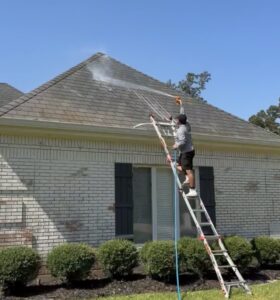
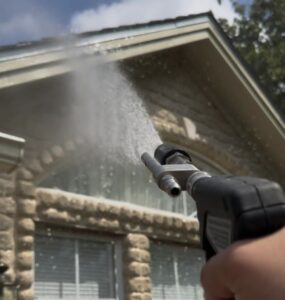
Soft washing uses low pressure, about what you get from a garden hose. The cleaning solution does the work, not the water.
- We mix the right solution. We blend a bleach-based cleaner with water and a surfactant that helps it stick and soak in. Diluted bleach is the same type of cleaner shingle makers recommend for algae.
- We apply it at low pressure. The solution covers the roof without blasting the shingles.
- We let it dwell. The solution needs time to kill the algae at the root.
- We rinse and recheck. Some streaks keep fading over the next few rains as the dead algae washes off.
Before and After: Roof Wash in South College Station
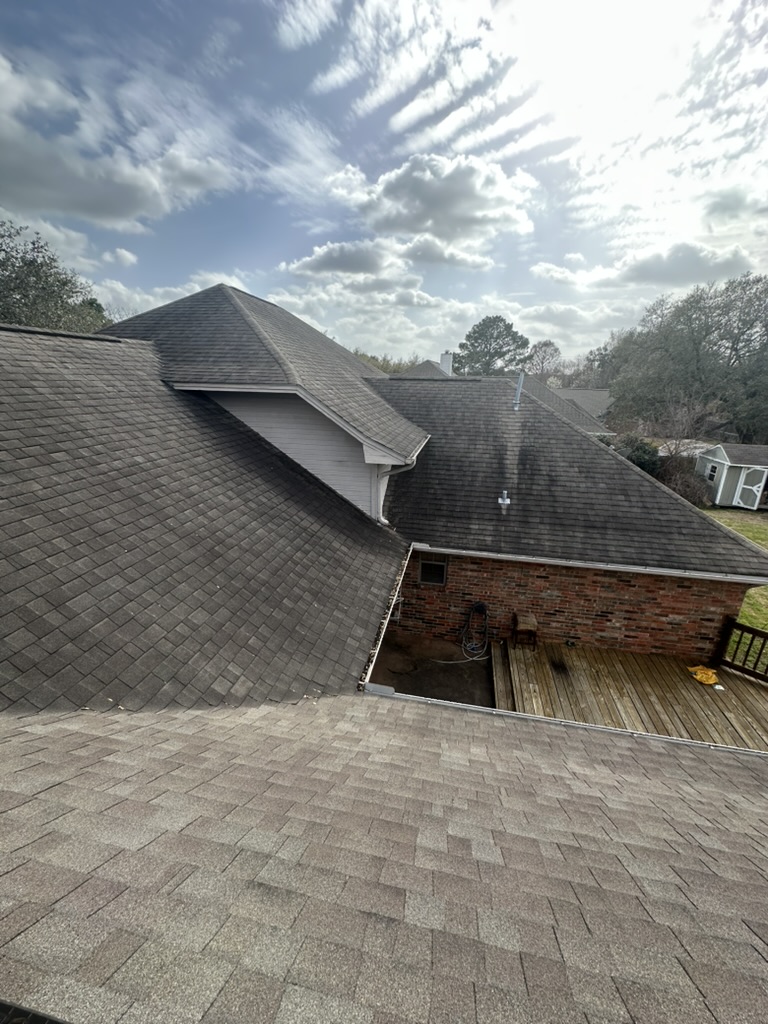
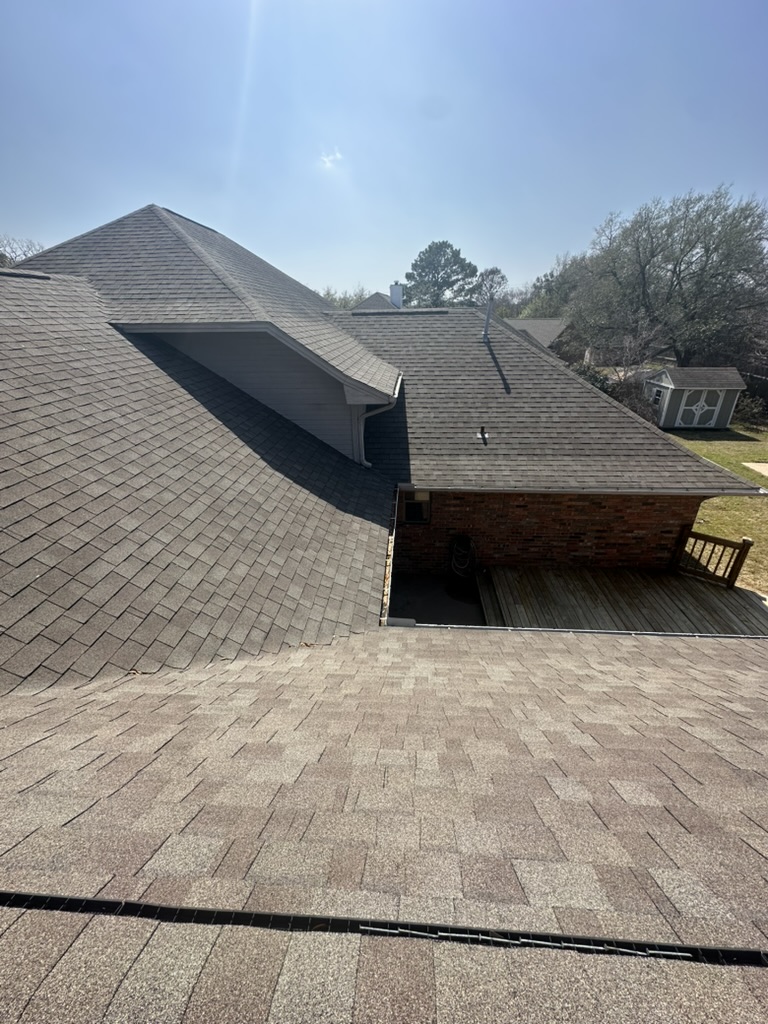
Same roof, same angle. The dark streaks on the back slopes are Gloeocapsa magma. After one soft wash, the shingles are back to their original color.
Safe for More Than Shingles
We adjust the mix for the roof material. Soft washing is safe for:
- Asphalt shingles
- Metal roofs
- Clay and concrete tile
- Slate
- Wood shake, with a gentler mix
The Best Time to Treat Black Streaks
Timing matters. We schedule roof washing for early morning or cool, cloudy days whenever we can.
- The solution stays wet longer. Hot sun dries it before it finishes killing the algae. Cool air gives it time to work.
- The results are even. Fast drying can leave spots and streaks behind.
- Your plants stay safer. Plants handle runoff better when they are not already stressed by afternoon heat.
In the Brazos Valley, fall, winter and spring mornings are ideal. In summer we start at sunrise. Treating streaks early also keeps them from spreading across the rest of the roof.
How We Protect Your Plants and Grass
This is the part homeowners ask about most. Here is what we do on every roof wash:
- Pre-wet everything. We soak plants, shrubs and grass before we start. Leaves full of water absorb far less solution.
- Spray a neutralizer. We apply a bleach neutralizer to plants, grass and metal during and after the job. It stops the solution from doing harm.
- Cover delicate plants. We use tarps over flower beds and sensitive plants near the house.
- Bag the downspouts. We attach bags to the downspouts to catch the runoff before it hits your beds and lawn. Then we dispose of it properly.
- Rinse when we finish. We give your landscaping a final rinse before we leave.
We also cover outdoor outlets and fixtures, since bleach solutions conduct electricity.
The Benefits of Roof Soft Washing
- Kills algae at the root, so results last longer
- Protects your shingle granules
- Helps your roof reach its full lifespan
- Keeps your roof cooler in the Texas sun
- Restores your curb appeal in one visit
- Costs far less than an early roof replacement
Get Your Roof Cleaned Right
Black streaks will not go away on their own. They spread every season you wait. We serve Bryan / College Station and the entire Brazos Valley, and we will tell you exactly what your roof needs. Call or text 979-946-2056 or get a free quote.